

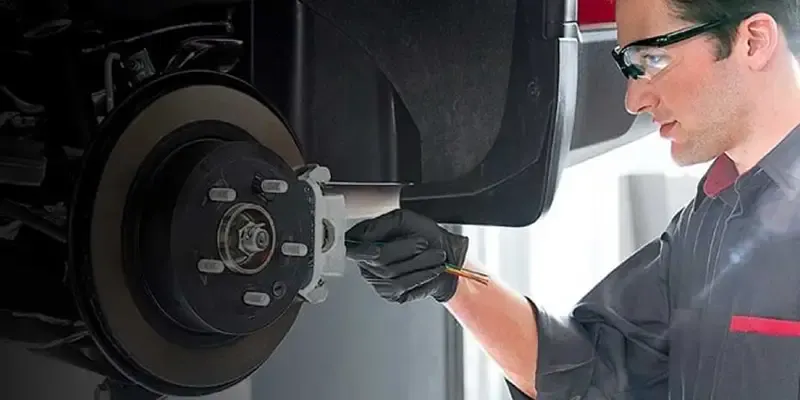
Brakes turn your Nissan’s speed into heat every time you slow down, and the pads, rotors, and fluid that make it happen wear with every mile. Keeping them healthy protects your stopping distance and supports systems like Automatic Emergency Braking. Our factory-trained technicians service Nissan brake systems with genuine parts and Nissan’s own procedures, including the electronic parking brakes found on many newer models. Mandeville commuters who hit stop-and-go traffic at both ends of the Causeway can book brake service through our service scheduling tool.
Worn pads can grind into the rotors, turning a routine pad replacement into a bigger repair, and overheated or warped rotors cause vibration and longer stops. Brake fluid absorbs moisture over time, especially in humid climates, which lowers its boiling point and can lead to a softer pedal. Nissan’s driver-assist technology, including the Automatic Emergency Braking in Nissan Safety Shield 360, also depends on a healthy brake system to respond the way it was designed. Regular inspections help us catch wear early and keep repair costs predictable.
Many brake pads include a small metal wear indicator that squeals when the pad gets thin, so a high-pitched noise during light braking is worth checking soon. Grinding, a pulsing pedal, a pull to one side, a soft or sinking pedal, or a brake warning light all call for an inspection right away. Stop-and-go driving around Harvey and Kenner wears pads faster than open highway miles. Our technicians can also measure pad thickness during a tire rotation, since the wheels are already off.
Brake shops and quick-lube chains handle many makes, while our technicians follow Nissan’s specifications for pad material, rotor thickness, and fluid type. Many newer Nissans use an electronic parking brake that has to be placed in service mode with the right equipment before rear pads are replaced, and our technicians have the Nissan tools to do it. Genuine pads and rotors come from our parts center, each job is recorded in your service history, and current maintenance offers appear in our service and parts specials.
There is no fixed mileage, since pad life depends on driving style, traffic, and the vehicle. Having pads measured during regular service visits is the most reliable way to know when they are due.
Not always. Rotors within Nissan’s minimum thickness and free of deep grooves or warping can stay in service, while worn or damaged rotors should be replaced along with the pads.
Your Nissan maintenance schedule lists the recommended interval for your model. Because fluid absorbs moisture, humid climates make keeping up with that schedule especially worthwhile.
A soft or spongy pedal can come from air or moisture in the fluid, a leak, or worn components. It affects stopping power, so have the vehicle inspected before driving it far.
A brief squeak on a damp morning can be normal as surface rust clears from the rotors. A squeal that continues during regular braking often comes from the pad wear indicator and means an inspection is due.
